
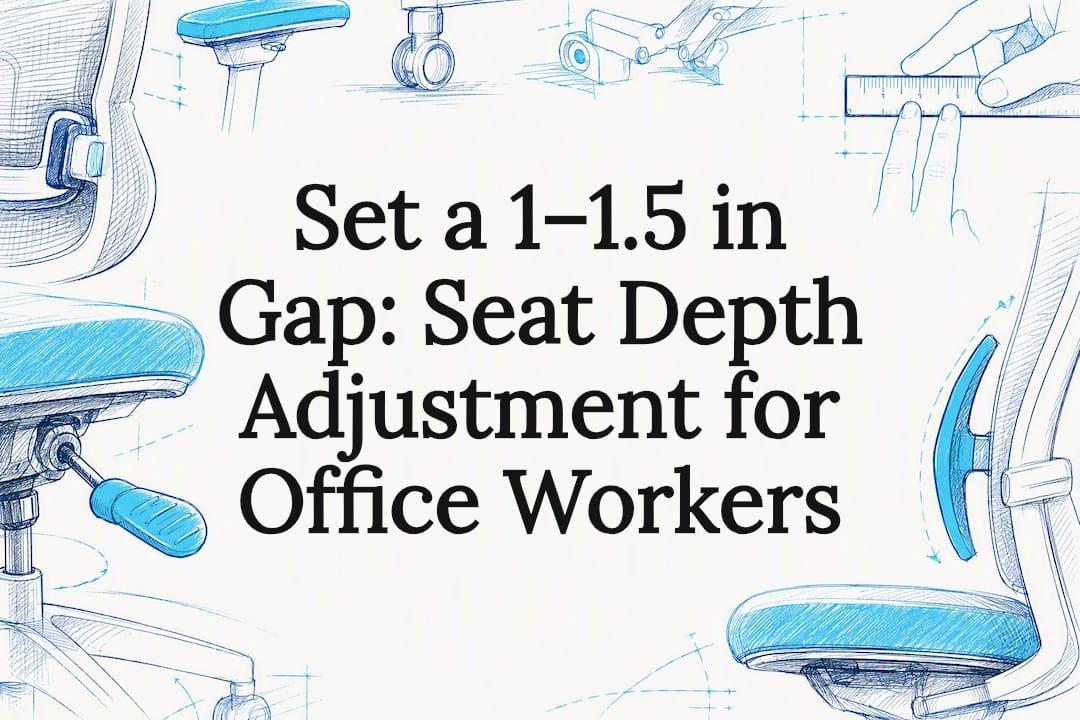
Set your seat so you can sit fully back with roughly two fingers between the seat edge and the back of your knee. That gap protects circulation and lets your lumbar support do its job properly. Plant your feet flat, set seat height first, slide the seat pan until that gap appears, then lock it. No slider on your chair? A footrest or a firm cushion against your lower back gets you close enough.
TL;DR:
- A two-finger gap of about 1 to 1.5 inches behind the knee is essential for proper seat depth adjustment and lumbar support engagement.
- Adjust the seat depth only after setting seat height and ensuring feet are flat, as skipping steps leads to a less effective fit.
- Pressure behind the knees indicates the seat is too deep, while pain under the sit bones suggests it is too shallow, requiring re-evaluation.
- For chairs without adjustable seat depth, adding a footrest or lumbar cushion can improve fit, but replacing the chair is the best long-term solution if problems persist.
- Proper seat depth reduces discomfort and can improve focus by preventing circulation issues and musculoskeletal strain during long hours of sitting.
Table of Contents
- What does seat depth adjustment actually fix?
- How do you adjust seat depth correctly?
- How do you know if your seat depth is wrong?
- What types of seat depth mechanisms exist?
- What if your chair has no seat depth adjustment?
- Where can you get more chair-fit guidance?
- Does correct seat depth actually change how your day feels?
- How Ulti helps you get seat depth right
- Sources
- FAQ
What does seat depth adjustment actually fix?
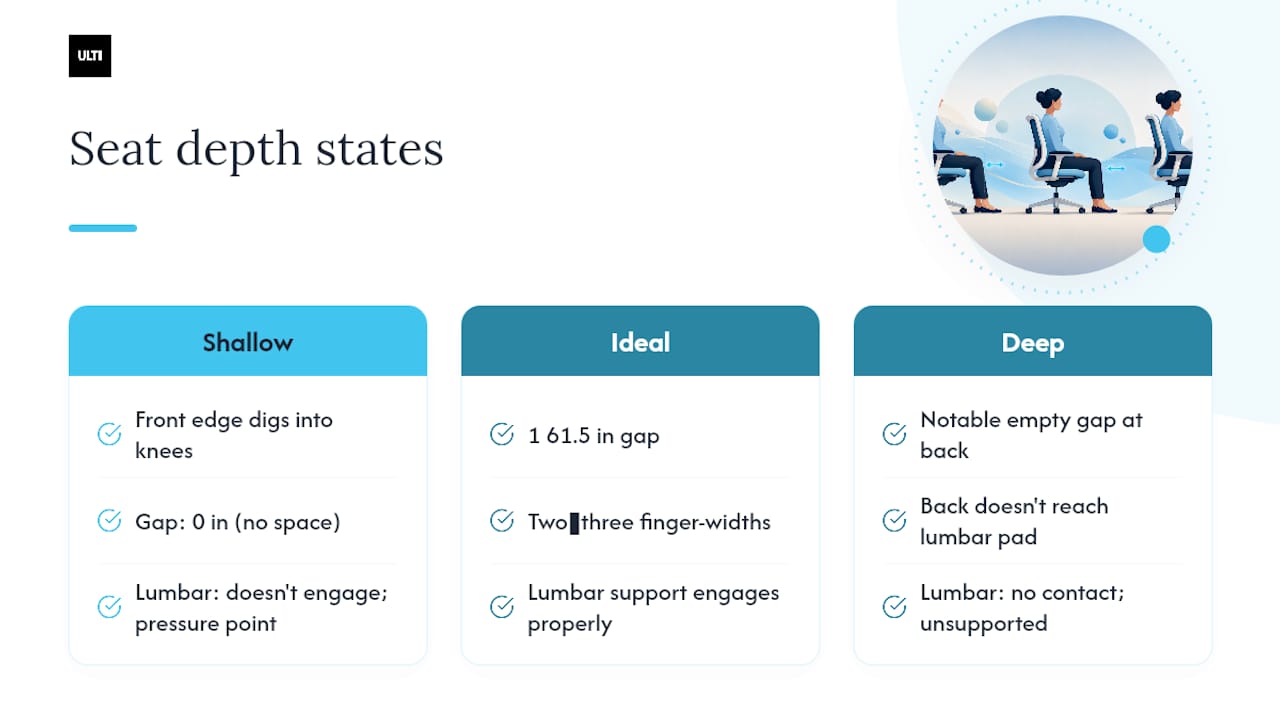
Seat depth adjustment moves the seat pan (or the backrest, on some chairs) so the distance between the front edge of your seat and your lower back matches the length of your thighs. Get it wrong and one of two things happens: either the front edge digs into the back of your knees, or you're left with a notable empty gap between your back and the lumbar pad.
The benchmark that ergonomists actually use is the two-finger rule: a gap of roughly 1 to 1.5 inches, or about two to three finger-widths, between the seat edge and the back of your knee. This isn't a rigid anthropometric measurement. It's a practical, repeatable check you can do in five seconds, and it's the version of seat depth guidance that shows up in the ISO ergonomics standard most manufacturers design against.
Why does this small gap matter so much? Ergonomic furniture is only as good as its fit, and seat depth is one of the variables that determines whether your lumbar support engages at all. If you can't sit back far enough, the backrest never touches your spine no matter how good the chair's lumbar contour is. Poor seat depth has been linked to the wider musculoskeletal strain that ergonomic furniture is designed to reduce, which is why this adjustment tends to matter more than people assume when they're setting up a chair for the first time.
How do you adjust seat depth correctly?
Work through the adjustment in order. Skipping ahead to the depth slider before your feet and height are sorted is the most common reason people get a "correct" gap that still feels wrong.
- Plant your feet flat. Rest them fully on the floor, or on a footrest if your chair is too tall for your leg length. This anchors everything that follows; if your feet are dangling or tucked under you, the rest of the sequence won't hold.
- Set seat height. Adjust until your thighs run roughly parallel to the floor and your hips sit slightly above knee level. This is the foundation for the "90-90-90" posture, where hips, knees, and elbows all sit close to a right angle.
- Sit fully back. Push your hips right into the seat back so the lumbar curve nests into your lower spine. Don't perch on the front edge to reach the desk, this is where most bad habits start.
- Find the depth mechanism and set the gap. On chairs with a sliding seat pan, the lever usually sits beneath the front or side of the seat. Some chairs skip the slider entirely and adjust the backrest horizontally instead. Either way, slide until you land on that two-finger gap behind your knee.
- Lock it and check circulation. Sit for a few minutes. Any numbness or tingling in your thighs means the seat is still too deep. Give the setting three or four days before deciding it's wrong, your body needs a bit of time to register what "correct" feels like after months of a bad setup.
Pro Tip: Do this adjustment at the end of the day, not first thing in the morning. Your body settles slightly as you sit, and an evening fit check tends to be more accurate than one done cold.
How do you know if your seat depth is wrong?
Your body tells you before your brain catches up. The pattern of discomfort usually points straight at the cause.
- Pressure or numbness behind the knees almost always means the seat is too deep. The front edge is compressing the area behind your knee, restricting blood flow to your lower leg.
- Aching or sharp pain under your sit bones signals a seat that's too shallow. Your thighs aren't getting enough support, so your weight concentrates on a small area at the base of your pelvis.
- Constantly sliding forward during the day often isn't a depth problem at all. If the two-finger gap checks out but you keep drifting to the front edge, the real culprit is usually seat tilt or a slack pan angle, not depth.
A quick self-test: recheck the two-finger gap, confirm your lower back is actually touching the lumbar support, and notice whether your legs feel normal by mid-afternoon. Tingling by then is a reliable early warning sign that the seat is still too deep, even if it looked fine that morning.
If a symptom persists after you've re-run the full adjustment sequence, changed the seat tilt, and tried a footrest or cushion, that's the point to stop guessing and get a proper ergonomic assessment. Chronic pressure behind the knee combined with reduced circulation isn't something to push through for weeks on end.
What types of seat depth mechanisms exist?
Not every chair adjusts depth the same way, and knowing which type you have saves a lot of fumbling under the seat.
- Sliding seat pan. The most common mechanism. A lever or paddle, usually at the front or side of the seat, releases the pan so it slides forward or back. Typical ranges run around a few centimetres, similar to the roughly 74mm of travel documented in manufacturer guidance for sliding-pan chairs.
- Adjustable backrest. Instead of moving the seat, the backrest itself slides horizontally toward or away from the front edge. This achieves the same effective depth change without a pan mechanism.
- Fixed-seat chairs. No adjustment at all, so fit depends entirely on whether the manufacturer's fixed depth happens to suit your leg length.
- Mesh seats specifically. Mesh can stretch and "hammock" over time, subtly changing your effective depth even on a chair set correctly at first. It's worth rechecking the fit periodically rather than assuming a mesh seat stays put forever.
What if your chair has no seat depth adjustment?
A fixed-depth chair isn't a dead end. A few low-cost changes get most people close to a proper fit without buying anything expensive.
- Add a footrest. If you're shorter than the chair's fixed depth allows for, a footrest lets you sit fully back and keep lumbar contact instead of perching forward just to reach the floor.
- Use a lumbar cushion or wedge. A firm cushion effectively shortens the usable seat depth for taller seats, closing the gap between your back and the support.
- Know when to replace the chair. If you're still getting circulation problems or knee pressure after trying both fixes, and your body proportions sit well outside what the fixed seat was designed for, no accessory will solve it permanently.
Pro Tip: A rolled towel wedged into the small of your back is a genuinely effective temporary lumbar fix while you sort out a proper cushion or a replacement chair.
Where can you get more chair-fit guidance?
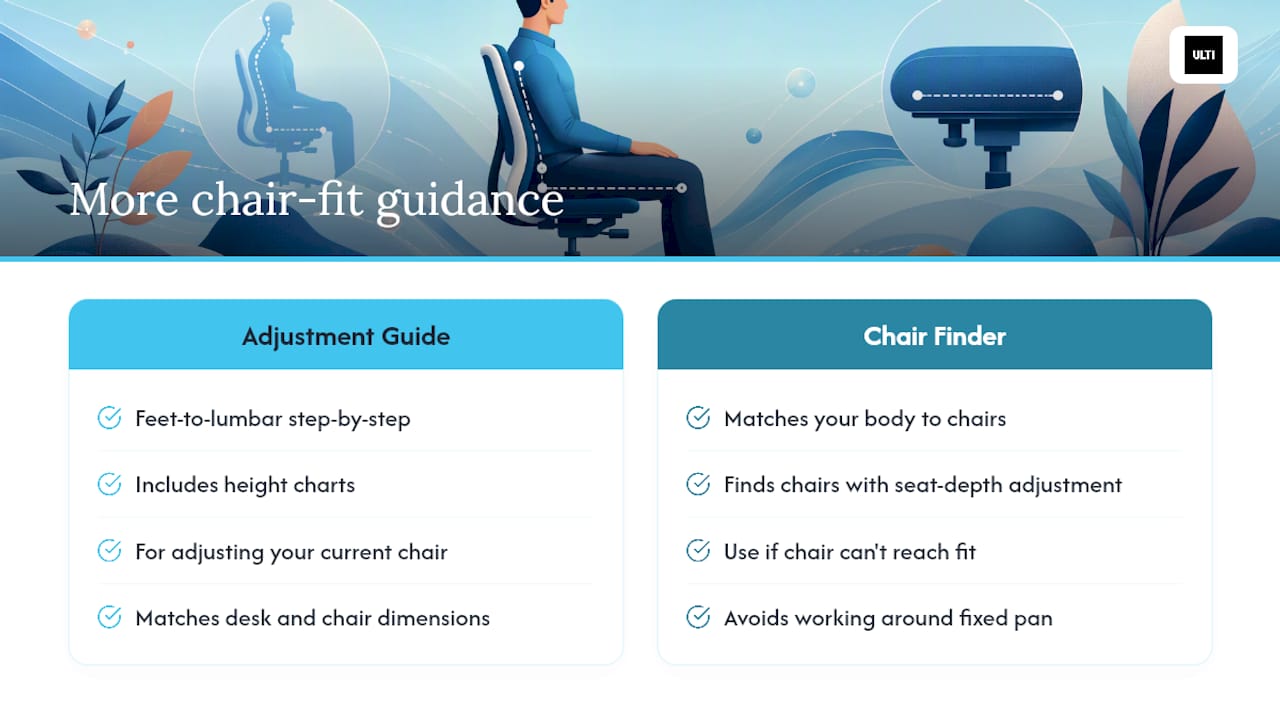
Detailed, step-by-step chair adjustment guidance is available that walks through the same feet-to-lumbar sequence covered here in more depth, including height charts for matching desk and chair dimensions. If your current chair simply can't reach the fit you need, the ergonomic chair finder matches your build to a chair with genuine seat-depth adjustment, rather than leaving you to work around a fixed seat pan indefinitely.
Does correct seat depth actually change how your day feels?
The difference shows up less in your back and more in your focus. Once the seat stops digging into your knees or leaving your lumbar support floating uselessly behind you, that low background ache that used to creep in by 3pm simply doesn't arrive. Pair the fit with regular movement, an easy rule is standing or shifting position roughly every 20 minutes, since even a perfect seat depth doesn't cancel out the cost of sitting still for hours on end.
— ULTI
How Ulti helps you get seat depth right
If your current chair has no depth slider, or the range it offers still leaves that knee-edge gap wrong, an accessory is only a partial fix. Certain ergonomic chairs are built with proper seat-depth adjustment as standard, not an afterthought bolted onto a fixed pan, so the two-finger gap and lumbar contact described above are achievable rather than approximate.
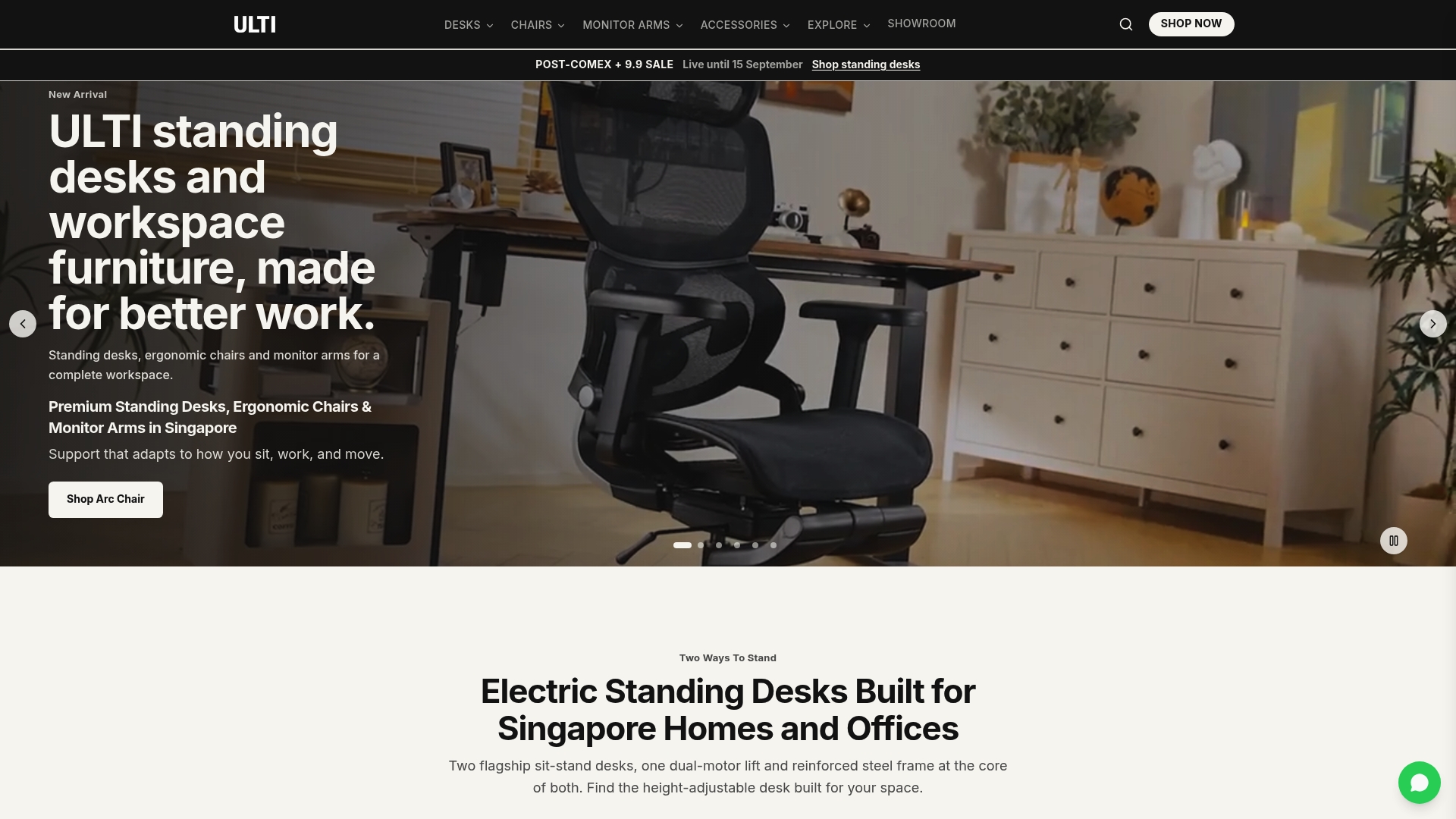
The Ascent ergonomic chair is an example of what that looks like in practice, a chair with a genuine depth mechanism rather than a compromise. If you're not sure which model matches your build, an ergonomic chair finder tool can help narrow it down in a couple of minutes. Start there, or browse the ergonomic chair range to see what fits your desk setup.
Sources
FAQ
What is seat depth adjustment?
It's the mechanism that lets you slide the seat pan (or backrest) forward or back so the seat matches your thigh length, leaving a small gap behind your knee rather than pressure or empty space.
What is the optimal seat depth?
There's no single measurement in centimetres, since it depends on your leg length, but the practical target is a two-finger gap, roughly 1 to 1.5 inches, between the seat edge and the back of your knee while sitting fully back.
What is the 90-90-90 rule for sitting?
It's a posture heuristic where your hips, knees, and elbows all sit close to a right angle when seated, and correct seat depth is what allows the knee angle to land properly while your back still reaches the lumbar support.
What happens if my seat depth is too short?
Your thighs lose adequate support and your weight concentrates on the sit bones, which typically causes aching or sharp pain at the base of the pelvis during long sitting stretches.
What happens if my seat depth is too deep?
The front edge presses into the back of your knee, which can restrict circulation and cause numbness or tingling, and it often pushes you to slide forward, away from your lumbar support entirely.