
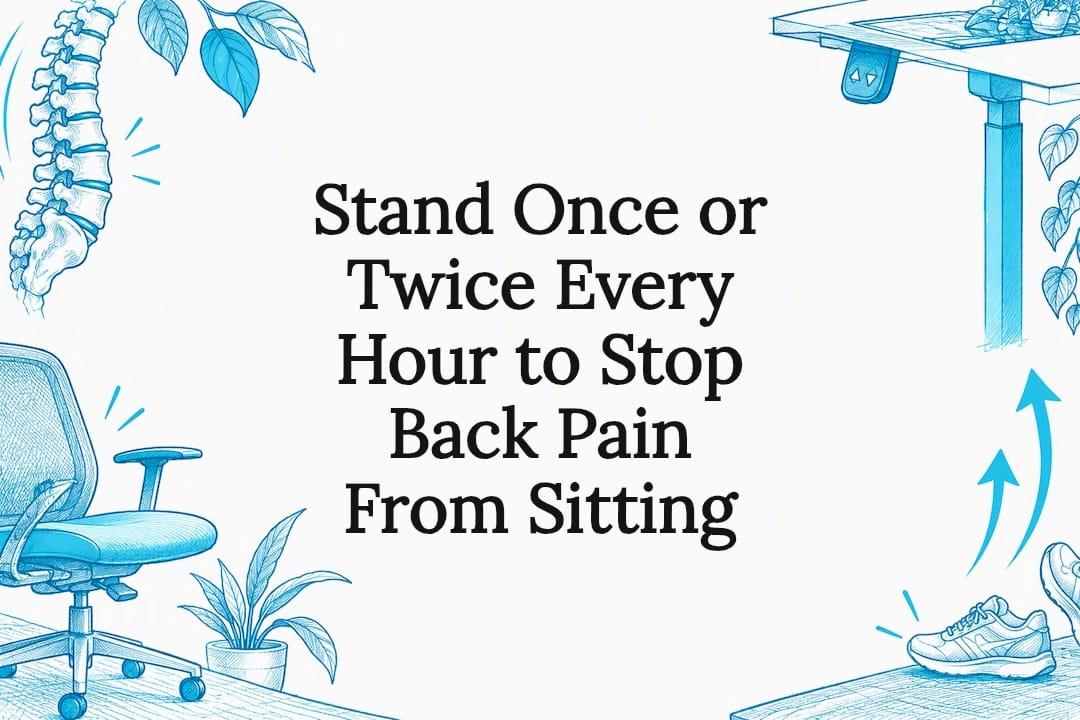
If sitting triggers your back pain, the most effective first step is to stop staying still: stand, walk briefly and vary your posture often. Short, frequent breaks relieve pressure on your spine faster than finding one "correct" way to sit. We'll walk through why sitting causes pain, what to do right now, which stretches help most, and when it's time to see a doctor.
TL;DR:
- Short, frequent movement breaks during sitting are more effective than long periods of stillness in relieving back pressure and preventing pain.
- Sitting causes increased pressure on spinal discs and muscle fatigue, especially when leaning forward or remaining static for extended periods.
- Incorporating targeted stretches and strengthening exercises daily helps support the spine and reduces the risk of chronic back issues.
- An ergonomic workspace with adjustable furniture and habitual movement patterns significantly decreases the likelihood of recurring back pain.
- Seek medical attention if back pain is accompanied by neurological symptoms, bladder issues, or persists beyond two to six weeks despite self-care.
Table of Contents
- What commonly causes back pain when you sit
- How sitting changes spinal load: simple biomechanics that matter
- What to do right now if your back hurts after sitting
- Desk-friendly stretches and strengthening moves for relief and prevention
- Longer-term prevention: chair, desk and habit changes that stop pain recurring
- Red flags and timelines for professional assessment
- Why we think about desks differently
- Set up a workspace that supports movement, not just posture
- FAQ
- Sources
What commonly causes back pain when you sit
When you sit for long stretches, your spine takes on load it isn't built to hold in one fixed position. Slouching or leaning towards your screen shifts weight onto the front of your spinal discs, which increases pressure on the lower back compared with standing upright. At the same time, your hip flexors shorten from staying bent, while your glutes and abdominal muscles, the ones meant to support your spine, go quiet and weaken.
This combination of stress and fatigue is often what aggravates existing issues rather than creates them from scratch. Conditions commonly worsened by prolonged sitting include:
- Disc bulges or herniation, where added pressure pushes disc material against nearby nerves.
- Sciatica, where nerve irritation causes pain running down the leg.
- Muscle spasm, often a protective response to strain or poor support.
- Spinal stenosis, where narrowed space around the spinal cord makes certain positions uncomfortable.
It's worth separating the myth from the mechanism here. There isn't one "bad" posture responsible for your pain. Staying still in any posture, even a technically good one, for too long is the real risk factor.
How sitting changes spinal load: simple biomechanics that matter
Your spinal discs act as cushions between vertebrae, and how much pressure they bear depends heavily on your position. Standing keeps that pressure relatively even. Sitting raises it, and leaning forward while seated raises it further still, which is why hunching over a laptop tends to leave your lower back aching faster than sitting upright does.

The deeper issue isn't sitting itself but staying static. Muscles held in one position for too long fatigue and stop supporting your spine properly, letting more load fall onto the discs and ligaments.
A meta-analysis of workplace programmes found that multi-component interventions combining adjustable equipment with education and reminders were more effective at cutting sedentary time than equipment alone. That matters because it confirms what desk-based workers often suspect: a good chair helps, but it only works alongside a habit of actually getting up.
What to do right now if your back hurts after sitting
The instinct to stay still and wait out the pain usually backfires. Gentle movement, not rest, tends to ease stiffness faster and supports a quicker return to normal activity.
- Stand up and walk for a minute or two, aiming to do this once or twice every hour.
- Do small movements at your desk: shoulder rolls, seated torso twists, or a gentle forward and backward pelvic rock.
- Reset your sitting position: sit back onto your sit bones, use lumbar support, keep feet flat on the floor, and avoid leaning towards the screen.
- Apply heat to loosen tight muscles, or ice if the area feels inflamed, whichever feels better for you.
- If pain is manageable, over-the-counter pain relief can help you stay mobile, following the label's guidance.
Stop any movement that sharply increases pain, especially if it radiates down a leg, and scale back rather than pushing through.
Pro Tip: Set a recurring timer for around three-quarters of an hour. When it goes off, stand immediately, even just for one lap around your desk.
Desk-friendly stretches and strengthening moves for relief and prevention
A few minutes of targeted movement, done consistently, does more for your back than an occasional long stretch session. Mix these into your day rather than saving them for the evening.
Stretches to ease tight areas:
- Hip flexor stretch: kneel on one knee, push your hips gently forward, hold for 20 to 30 seconds each side.
- Hamstring release: extend one leg on a low surface, hinge forward from the hips, hold for 20 to 30 seconds.
- Thoracic rotation: seated, cross your arms over your chest and twist gently side to side, 8 to 10 reps each way.
Strengthening moves to build support:
- Glute bridge: lie on your back, knees bent, lift your hips, squeeze for two seconds, 10 to 12 reps.
- Bird-dog: on hands and knees, extend opposite arm and leg, hold briefly, 8 reps each side.
- Pelvic tilts: seated or lying down, gently flatten and arch your lower back, 10 reps.
Aim for the strengthening set two to three times a week and the stretches daily. Progress by adding reps before adding difficulty, and treat any sharp or radiating pain as a signal to stop and reassess rather than push through.
Pro Tip: Attach one stretch to something you already do, like standing during a phone call or rotating your torso while the kettle boils.

Longer-term prevention: chair, desk and habit changes that stop pain recurring
Equipment choices matter, but only when paired with the habit of moving. A chair that fits well removes one source of strain; a desk that lets you change position removes another.
Run through this chair checklist:
- Seat depth should leave two to three finger-widths between the seat edge and the back of your knees.
- Lumbar support should sit in the curve of your lower back, not above or below it.
- Armrests should let your shoulders relax, not hunch up or droop.
- Feet should sit flat on the floor or a footrest, with knees roughly level with hips.
Your wider workstation layout matters too. Screen height at eye level and keyboard placement that keeps wrists neutral both reduce the forward lean that drives up disc pressure, and a monitor arm makes that adjustment far easier than propping a laptop on books. Tidy cable routing also removes the small daily frustrations that tempt you to sit awkwardly just to reach a cord, something our ergonomic work-from-home setup guide covers in more detail.
Alternating between sitting and standing through the day, supported by a sit-stand desk, gives your spine the variety it needs without requiring you to consciously remember every hour. Pairing that with a simple reminder system, whether a phone alarm or a habit tied to meetings, reflects what the research on multi-component interventions consistently shows: equipment plus a prompt to use it outperforms either alone.
Red flags and timelines for professional assessment
Most back pain from sitting eases with movement, posture changes and a bit of patience. A smaller number of cases need a clinician's input, and recognising which is which keeps you from either over-worrying or waiting too long.
Seek urgent medical attention if you notice:
- New numbness, tingling or weakness in one or both legs.
- Loss of bladder or bowel control.
- A high fever alongside back pain.
- Back pain following significant recent trauma, such as a fall.
Book a routine appointment if pain hasn't improved, or has worsened, after two to six weeks of self-care, depending on how severe it feels. A clinician will usually start with a physical assessment and movement-based advice rather than jumping straight to imaging, since scans aren't always needed to guide early treatment.
Why we think about desks differently
We spend our days thinking about how people sit, stand and move through a workday, and the pattern is consistent: comfort doesn't come from one perfect chair setting, it comes from changing position often. Good equipment makes that easier, but it's the habit that does the work. Our own product development leans on that principle, pairing adjustable furniture with practical guidance so the equipment actually gets used, not just owned.
— ULTI
Set up a workspace that supports movement, not just posture
If your workstation makes it easy to stay still for hours, no stretch routine will fully undo that. We design electric standing desks with dual-motor height adjustment, reinforced steel frames and built-in cable management, alongside ergonomic chairs with proper lumbar and seat-depth adjustment, so switching positions takes seconds rather than effort.
Browse our standing desks and ergonomic chairs, or use our chair finder tool to match a chair to your build and desk setup. If you'd rather have it set up for you, our installation service handles the assembly so your new setup is ready to use the same day.
This article is general information, not a substitute for advice from a qualified doctor. Consult a qualified healthcare professional about your own circumstances before acting on anything here.
FAQ
How to get rid of back pain due to sitting?
Stand up and move as soon as you notice discomfort, since gentle activity tends to ease stiffness faster than staying still. Combine frequent short breaks, posture resets with lumbar support, and basic stretches, and use heat or over-the-counter pain relief if needed while you stay mobile.
What causes back pain only when sitting?
Sitting raises pressure on your spinal discs compared with standing, and leaning forward increases that pressure further. Muscles that support your spine also fatigue when held still for long periods, which is why pain often appears specifically during or after sitting rather than during standing activity.
Why does my back get stiff after sitting?
Staying in one position lets supporting muscles fatigue and reduces blood flow to the area, which shows up as stiffness once you try to move. Returning to standing and walking as soon as possible after sitting usually loosens this up within a few minutes.
What are the signs of a tight lower back?
A tight lower back often feels stiff when you first stand up, resists full forward bending, and may ache dully across the area rather than in one sharp spot. If stiffness comes with numbness, tingling or pain running down a leg, that points to nerve involvement rather than simple muscle tightness and is worth having assessed.
When should I see a doctor about back pain from sitting?
See a doctor promptly if you notice leg weakness, numbness, loss of bladder or bowel control, or pain following a significant fall. For everyday stiffness, a routine appointment makes sense if the pain hasn't improved after two to six weeks of self-care and movement.
Sources
- If You Have Back Pain When Sitting, Here’s How to Fix It
- Workplace interventions to reduce sedentary time — meta-analysis